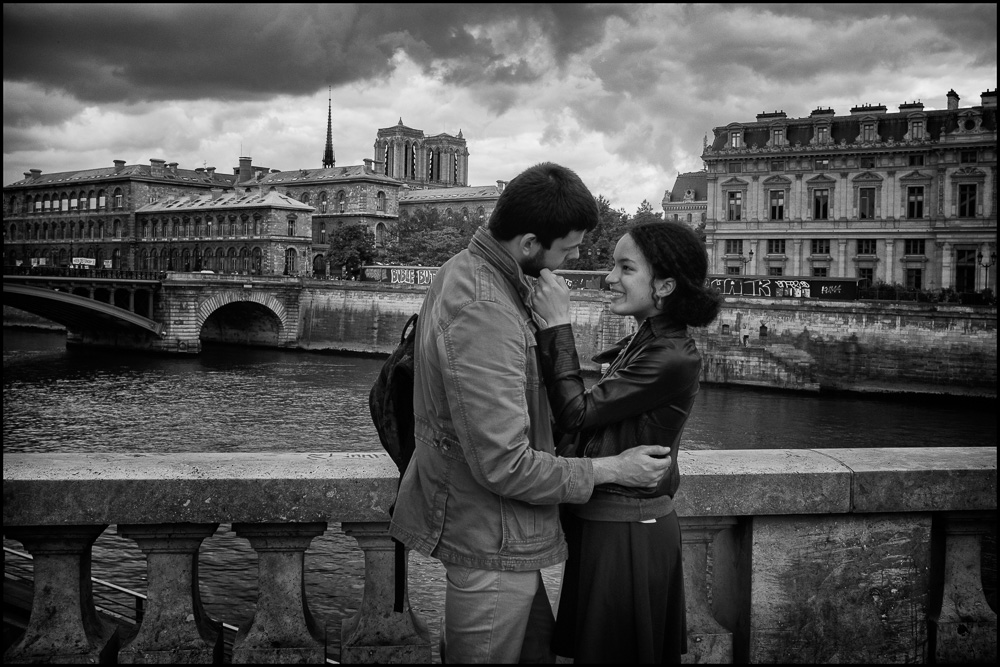
In this latest TCF video, Ibarionex talks about his use of the Fujifilm x100s during a recent trip to Europe. In it, he discusses his personal experience with the camera and how he used its features and limitations to create his photographs.
You can now submit images to The Candid Frame Flickr Group. Join and submit your favorite images from any genre or style of photography. You can also watch this and previous videos by visiting the show's YouTube Channel.
When photographer David Walter Banks began turning his lens toward the spaces where power, faith, and ideology take physical form, he set out to explore more than architecture. His photographs examine how belief systems—political, religious, and cultural—shape the built environment and, in turn, influence how we move through the world. From monuments and government buildings to evangelical megachurches, David’s work reveals how space is used to project authority, belonging, and conviction.
When photographer Ben Geier first began making images, it was his Midwest upbringing and a fascination with abandoned places that set him on a path of visual discovery. Over the past decade, Ben’s work has led him across the United States in search of once-vibrant theatres, roadside restaurants, neon signs, motels, and storefronts—places that carry the texture of America’s cultural and architectural history.
When photographer Martyn Goddard began documenting the emerging punk and new wave scene in London during the late 1970s, he was capturing more than a musical movement—he was photographing a cultural revolution. His lens found its way to some of the most influential bands of the era, none more iconic than Blondie. His candid, stylish, and energetic photographs reveal the band’s magnetic presence both on and off stage, chronicling the rise of Debbie Harry and her bandmates at a moment when music, fashion, and attitude collided.
When photographer and educator Mark Comon talks about photography, his passion is unmistakable. As the owner of Paul’s Photo in Torrance, California, and founder of the Creative Photo Academy, Mark has spent decades helping photographers at every level discover their creative potential.
When photographer Frank Jackson first picked up a camera, he discovered more than a tool—he found a way to translate how he sees and feels the world. Known for his street photography and portraiture, Frank has built a career rooted in curiosity, observation, and a relentless drive to make work that is true to himself. His images often balance rawness and elegance, revealing moments that might otherwise pass unnoticed.
When photographer Jonas Paurell set out to explore the relationship between humans and the natural world, he embraced a practice that moves fluidly between art, documentary, and environmental storytelling. His images are rooted in a deep engagement with place—whether remote mountain landscapes or fragile ecosystems—and they reflect both an aesthetic sensitivity and an ecological urgency. Jonas’s work doesn’t simply document the environment; it raises questions about belonging, responsibility, and how our presence shapes the land we inhabit.
When photographer Dimitri Staszewski began his Close to the Bayou project, he was drawn to the layered and deeply personal relationship between people and place in southern Louisiana. His photographs explore the impact of land loss, environmental change, and cultural resilience, capturing stories that exist at the intersection of identity, heritage, and survival.
When multi-media artist Javiera Estrada speaks about her work, it’s not just about aesthetics or technique—it’s about transformation. Born in Acapulco, Mexico and raised in the United States after emigrating in 1989, Estrada brings a rich cultural memory of vibrant color, ritual, and mysticism into everything she creates. Whether working with photography, photograms, textiles, or mixed media, her art bridges the seen and unseen—merging earthly material with spiritual inquiry.
When photographer Justin Black first picked up a camera, he was drawn not just to the art of image-making but to the power of photography as a tool for exploration, conservation, and connection. Over the years, that passion has evolved into a remarkable career that bridges fine art, environmental advocacy, and education. As a co-founder of Visionary Wild and former executive director of the International League of Conservation Photographers, Justin has helped shape how we think about the relationship between photography and the natural world.
When filmmaker Ilie Mitaru first discovered Serbest Salih’s Instagram feed, he was struck by the power of the photographs—vivid, intimate images made by children from displaced and marginalized communities across Turkey. These weren’t typical snapshots. They revealed a bold visual instinct and emotional clarity that defied the children’s limited experience behind the camera. Ilie saw not just compelling photographs, but a powerful story of self-expression—one that urgently needed telling.
That story became First Frames, a film that shifts focus away from trauma and instead highlights the playful, curious, and complex inner lives of its young image-makers.
Jasmine Benjamin, a California native, embodies the laid-back spirit of Northern California where she was born and the dynamic energy of Hollywood, where her work thrives. With a career spanning 17 plus years as a stylist, consultant, and creative director, she has established herself as a key figure in culture.
Her latest project, CITY OF ANGELS: “A book about L.A. style”, is her first coffee table book, capturing the essence of contemporary LA style through 120 plus portraits of local luminaries.
When photographer Amani Willett turns his attention to American life, he does so with a quiet precision that reveals both its poetry and its contradictions. Working primarily in black and white, Amani’s photographs explore themes of history, memory, race, and belonging—often focusing on overlooked spaces and moments that carry deep cultural resonance. His work invites viewers to slow down and consider how the past lingers in the present, shaping both personal and collective identity.