Common Problems with Photographer's Websites


I am working on a project which involves me reviewing the websites of hundreds of photographers. Having to go through so many websites within a short period of time quickly reveals some of the more common issues with many of today's websites, which largely lead to frustration and disappointment to anyone who is considering a photographer for a potential project. Here are a few things that I noticed that I think should be considered in producing or updating your website.

1. Slow Loading
Waiting for pages or images to load might seem like a big deal if you are visiting a single photographer's website. However, imagine you are trying to look at dozens of sites within a short period of time. Now, the "nominal" waiting time becomes irritating, a feeling you don't want to give rise to even before the viewer has seen a single image. It's especially an issue when trying to quickly go from image to image. I don't want to have to refresh the screen for every new image. I want to quickly go through a selection of work and quickly assess whether the photographer's work is going to meet my needs. If the performance is sluggish, after a few moment, I'm off to the next photographer regardless of how great or special the work may be.

2. Poor Navigation
When I'm perusing a photographer's website, I'll likely go through some select galleries, specifically those that meet my needs. And so, I need to be able to find those galleries and click between them very easily. Having to go back to the home page in order to access another gallery is an inconvenience. Regardless on where I am on your site, I should be able to access other galleries, contact info, bio pages with having to take the additional step of going back to the home page. It's particularly frustrating when the interface to access the various parts of the sites changes from what exists on the home page. Now, I have to remember the two different systems that have been created to simply negotiate the website.

3. Poor Editing
Though I might be drawn to a photographer's site because of a single image that I'm excited about, it's disappointing to find that the other work on the site doesn't hold up to the quality of the initial image. There may be some strong photographs, but the site also includes competent but lackluster image that weaken the impact of the better photographs. It's especially an issue when I see a gallery of images that consists of several photographs from what appears to be the same shoot. When I see that I either think that the photographer is not shooting enough or can't make a decision as to what images from this shoot best exemplified their ability or talent. It may be unfair, but that's my take on it.

4. Image Are Too Small
I know that photographer are concerned with people stealing their images, which may convince them to display their images small to reduce how they can be used by someone who doesn't want to compensate the photographer. But the reality is that I want to see the image large to fully appreciate the image. If you are so concerned with your images being stolen, there are better ways to protect yourself, not least of which is registering your photographs with the copyright office. If you seriously concerned about your posted image being stolen but are not registering your copyright, your efforts to watermark, post small images, etc becomes the equivalent of spitting into the wind. Only showing your small images on your website just make it less likely that someone will get to fully appreciate your work.

5. Too Many Images & Galleries
Some photographers want to show that they are capable of doing anything and everything as a photographer. So, they put in hundredds of images on their site, far more than anyone will ever want to peruse. Worse yet, I'll see them include galleries to show that they do different types of photography, thinking that they don't want to lose out on some job opportunity. Frankly, I am making my assessment of a photographer within three or four images. If I like what I see, I'll spend more on the site. If not, I'm off the to the next artist.  When you are looking at hundreds of sites, it only takes a few second to make such a choice. So, I don't need to see all your work, just the best work that best exemplifies your talent and skill. Showing more work doesn't increase the chances of getting chosen. If anything, it likely lessens it.

6. E-Mail &  Contacting
Some photographers have you input your information on their site, rather than allowing me to e-mail them directly. That may be convient for them as well it allows them to collect data on people reaching out to them, but for it, it's a pain to have to input my data on each image. Because I'm contacting dozens of photographers, I want to be able to keep my own records in terms of who I've contacted using my own e-mail and database system. It's another step for me. It might be minor, but again, it's  usually the small things that most people notice and pay attention to.



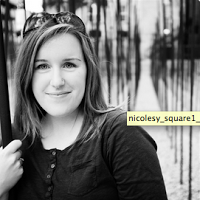
The Candid Frame #156 - Nicole S. Young


Nicole Young is a full-time photographer and author. She specializes in food and stock photography and licenses her images through iStockphoto and Getty Images. Nicole is an accredited Adobe Certified Expert (ACE) in Photoshop and is a “Help Desk Specialist” with the National Association of Photoshop Professionals (NAPP). 

She is author of the books Canon 7D: From Snapshots to Great Shots, EOS Canon 60D: From Snapshots to Great Shots and Food Photography: From Snapshots to Great Shots published by Peachpit Press, along with eBooks published through Craft&Vision. You can discover more about her and her work by visiting her website and her blog.  

Nicole Young recommends the work of Gregory Crewdson.


Click below to stream the interview.


 You can also subscribe to the show via iTunes by clicking here.

Or you can directly download the MP3 file by clicking here.


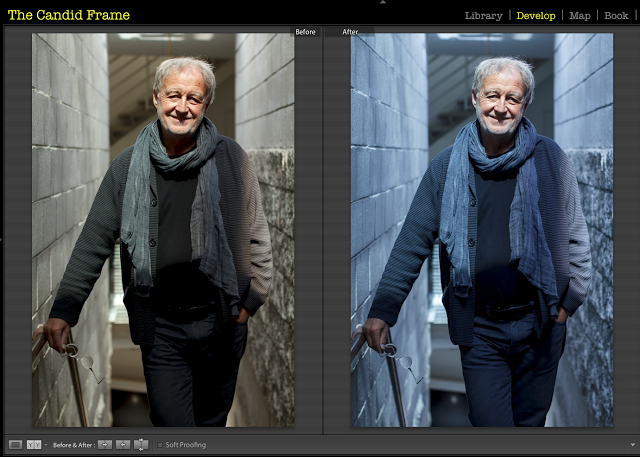
Nik Software Webinar this Friday w/ Ibarionex

I will be doing a webinar this Friday on my use of Nik Software's Viveza II and Silver Efex Pro II. Spaces are limited. You check register for the event by clicking here


Professional Photographer, host, producer and writer, Ibarionex Perello, will share how to fine-tune the look of color and black and white images by the process of selective editing to control the visual experience of a photograph. He will be demonstrating Viveza 2 and Silver Efex Pro 2 in Lightroom. Ibarionex is a photographer, writer, educator and the host of The Candid Frame photography podcast. He has over twenty years of experience in the photographic industry and his photographs and articles have appeared in Digital Photo Pro, Rangefinder, Shutterbug, Outdoor Photographer and Scott Kelby's Light It magazines. He is the author of several books and an adjunct professor at the Art Center College of Design. He also teaches online photography courses at BetterPhoto.com. (www.thecandidframe) 

The Candid Frame #155 - Jerod Foster and Ibarionex at Photoshop World 2012


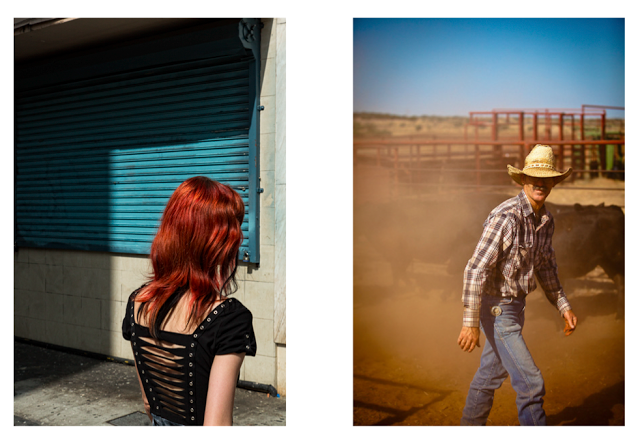
Ibarionex and Jerod Foster took the stage at the Peachpit Booth at Photoshop World 2012 in Las Vegas. During this presentation, they discussed their unique approaches to photography inspired by choosing their favorite of the other photographer's images. The discussion which was recorded live  provides an insight into how each photographer uses light, story telling, gesture and more to make effective and strong photographs. 

Jerod Foster was recently interviewed for an episode of The Candid Frame. You can listen to it by clicking here. You can discover more of his work by visiting his website and blog

The images below are shown in the order in which they were discussed during the presentation. 


 You can also subscribe to the show via iTunes by clicking here.

Or you can directly download the MP3 file by clicking here.


Jerod Foster
Ibarionex Perello
Jerod Foster
Ibarionex Perello
Jerod Foster
Ibarionex Perello

Jerod Foster

Ibarionex Perello
Jerod Foster
Ibarionex Perello


Bits of Wisdom from Jay Maisel

One of the pleasure of attending Photoshop World is the opportunity it provides me to sit in the presence of Jay Maisel. I've heard his presentations before and had the opportunity to study with him six years ago and he continues to inspire and inform what I hope to do with a camera.

I have the opportunity to interview Jay some years ago. Here is a link to the interview. Even if you have heard it before, it's worth listening to it again.


Here are some pearls of wisdom from one of my favorite photographers. 

"If you are not paying attention to your background, you are going to screw up anything you are trying to say with your foreground."

"Always carry your camera; it's easier to take picture that way."

"Shape is is the enemy of color."

"Here are three words for being a better photographer: 'Move your ass'"

"You only have two influences on the look of your photography: when you shoot and where you're shooting from."

"I don't believe as the dictionary says that gesture just has to do with the movement of arms and faces and legs.  I believe that gesture is involved in everything we photograph. We've all photographed gesture all our live. We just have not always been aware of it."

"Anything you do to make your image more specific, helps to make the photograph more powerful."

"Gesture will always reveal narrative, which light and color alone find it difficult to do. Gesture can tell a story."

"You cannot put your lettering in your pictures, unless you want it to be the content of your image."

"The most effective use of a pattern is when it becomes interrupted and there's a payoff in the end. Otherwise, it gets to be like wallpaper."

"You don't want to be a one-trick pony. You don't want to keep repeating yourself."

"If you can keep the element of surprise in your photography, you've already won the viewer half over."

"There is joy in ambiguity."

"There are going to be situations where you can't get yourself out of the picture. So, make yourself a part of the picture."

"I never saw light as something that casually fell on something in my picture, but rather as an integral something in my picture, like a solid object."


Ibarionex Perello & Jerod Foster at PSW

Jerod Foster and Ibarionex Perello will take the stage together today at Photoshop World in Las Vegas. They will be speaking at the Peachpit Booth at 4pm to have a candid discussion about photography, seeing and creating image using their own images as examples. If you are attending the event come on down and take part in the conversation.

The Candid Frame #154 - Valerie Jardin

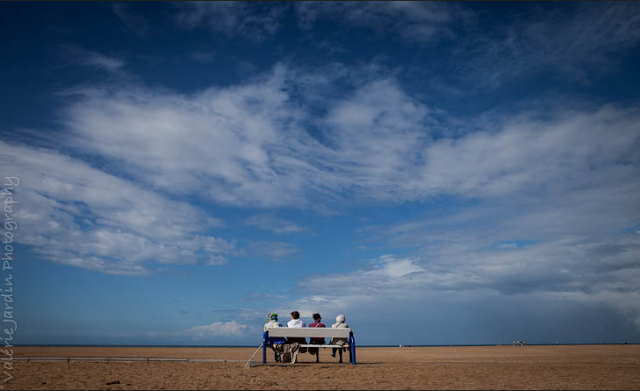
Valerie Jardin is a versatile photographer who shoots interiors and architecture where the details tell the story. She also photographs food and loves working with culinary artists on location. Portraiture work gives her the opportunity to photograph people in their environment and capture their true personality.

She also has a passion for street photography, writing and educating other photographers. Her articles appear regularly in the Digital Photography School online magazine and she teaches workshops including a street photography through the street of Paris. You can discover more about her and her work by visiting her website and blog

Valerie Jardin recommends the work of Jim Brandenburg


Click below to stream the interview.

 You can also subscribe to the show via iTunes by clicking here.

Or you can directly download the MP3 file by clicking here.

How to Keyword Your Images in Lightroom.


In this video, I demonstrate how I use keywords to organize my catalog of images. I share how I apply keywords during important and then again after making my initial selects from a shoot. This can greatly help you to be more efficient in organizing and searching for your images.


Meeting Maury Edelstein

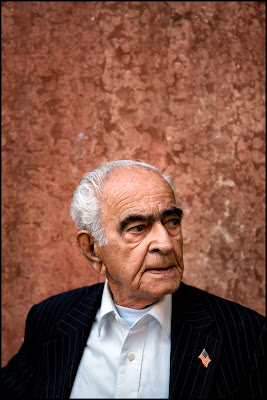
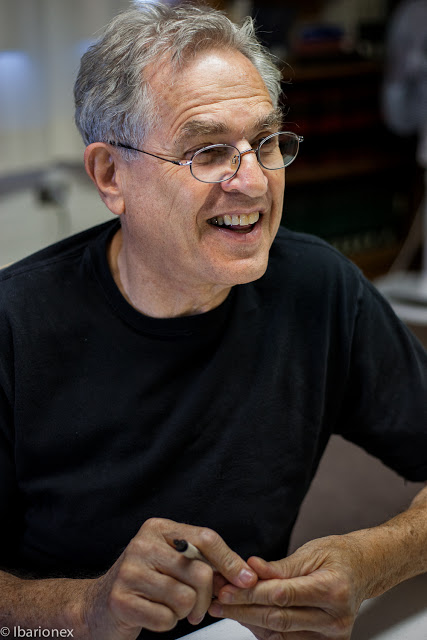
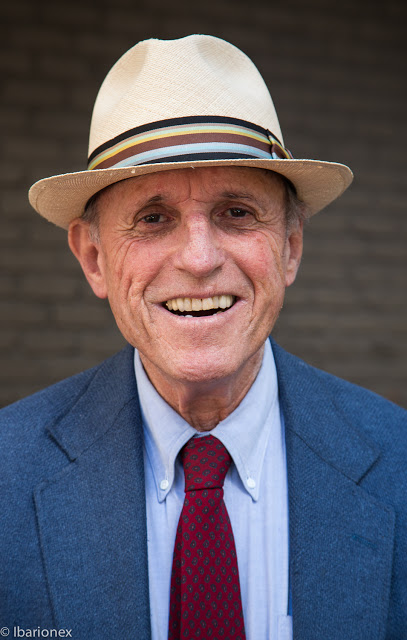
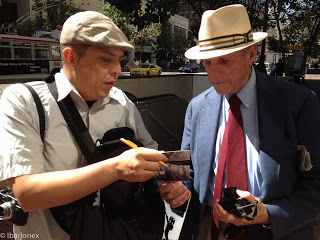
While I was in San Francisco yesterday, I spent some time shooting in the city with my friend Emilio. I was walking down Market Street when I spotted this dapper fellow making images with a small Canon camera. He was making images of a postal worker.

I struck up a conversation with him to discover that he had been photographing in this area for quite a long time and as people passed by, it seemed like he was familiar with a lot of them and they him. Visiting his website afterwards, I realized that he had accumulated a large body of work.

But what really impressed me was the wonderful energy he brought to the street. A lot of street photographers can be very earnest about their work, but he seemed to be having a lot of fun. He was really having a ball being out there in the street getting his shots. And the fact that he was doing it with such a stylus ensemble of hat, tie and shoes really impressed me.

As I told Emilio later, I could only hope that I had that much energy and enthusiasm thirty years from now.

I meet a lot of photographers on the street, but Maury definitely left me inspired.

You can check out his impressive work by visiting his website.

Accepted Photog Truths: Never Give Your Work Away


Here’s an accepted truth that litters the internet, “You should never give your work away or work for free. If you do you’re just taking the livelihood away from hard working photographers.” (1, 2, 3)

The theory behind it is solid; if every photographer stands firm and demands payment for their work, the people who need pictures will have to pay for them. Interestingly this advice is most firmly held by established, professional photographers. The argument seems to be, if you do what I say, you protect my market, and you have the potential to be as successful as me in the future. These established photographers are usually the same people that claim that amateurs have reduced their business from $200,000 a year to $40,000. They are also the ones looking for free interns to work for them and the ones that won’t give you the time of day if you’re unlucky enough to end up in a room with them when they’re commissioned to shoot the event and you’re just trying to grab a few shots. Always question the motives of people giving you advice. Does the advice benefit you or the person giving the advice?

Let’s get one thing straight, we prosumer and enthusiast photographers are not killing the market for professionals with our amateur work. The market is changing with or without us. Yes, there’s more competition in all fields. Yes, the barrier to entry has been lowered. Yes, amateurs can now shoot like professionals. No longer does owning a professional rig guarantee you professional rates.

We can easily make comparisons with changes in the music industry. Digital has changed the music industry. Obviously Napster and the MP3 had a huge effect but the cheap tools available to enthusiast musicians meant that they didn’t have to wait to be signed to a label, to get expensive studio time, to be able to make a record. Affordable digital audio interfaces (fancy soundcards to you and me), cheap and easy to use DAW (Digital Audio Workstation) software, and a plethora of information and support from their internet peers meant that anyone with a sound, an idea, a little talent and a laptop could make a record to rival releases put out by the biggest label. That bedroom, laptop jockey doesn’t have the budget of the large label to promote their work but the internet does provide a way of finding an audience for even the most niche artist. The appeal of this homemade approach reaches to a lot of established artists too which is why you hear of big artists leaving big labels to make and release their own work directly to their audience. Of course the industry is threatened. They were the gatekeepers of what got made and released and that’s no longer true. They controlled the radio stations and they no longer have as much hit-making power.

But, despite this threat and change new, innovative, entertaining music is still being created, released, listened to and, occasionally, bought. Big stars are still making big bucks. At the other end of the spectrum there are now more enthusiasts than ever making and releasing music. Those enthusiasts don’t make 100% of their income from their music; most don’t make 50% and a lot don’t make anything. A lot give their music away - they just want to be heard. A few of the artists who start out giving their music away on YouTube will make it big (Justin Bieber) but most won’t and that’s alright. Just because I give away an electronica track away for free on Soundcloud doesn’t mean that Moby is going to lose any sales of his next album and, even the likes of Moby see the value in giving some work away for free. Moby still sells records - I put my audio doodlings out there - we both get heard (admittedly by vastly differing sized audiences). The music industry has not changed because some people give their work away for free; it was changing long before that.

The photography industry won’t collapse because you allow your work to be used for free. The person who asks to use your work for free is not going to see the error of their ways because you point out how unfair it is that you don’t get paid for your work; they will just move on to the next person until they find someone who says ‘yes’. Is it shameful that for-profit publications and organizations are taking advantage of enthusiasts and are asking for work for free? Of course it is but your insistence that they treat you like Annie Leibovitz is not going to change anything. Like the music industry, the publishing industry has changed. Magazines and newspapers are folding left and right as they struggle to compete in a digital environment. Why would they commission a professional to go on assignment to illustrate something when they can search Flickr and find a dozen people with appropriate shots? One of those photographers will be flattered enough to let them use their work for free.

As a photographer you have to decide if you need financial compensation for your work to be used. But don’t think for a moment that because you give your work away some pro out there won’t eat tonight. Don’t take that on. The market has changed. If you want to let someone publish your work without payment that’s between you and your accountant or god (take your pick). You don’t want to be taken advantage of but nor should you be bullied into how you allow your work to be used.

Smugs in San Francisco Tomorrow Night

I will be in San Francisco tomorrow to make a presentation for the Smugs of San Francisco. The event runs from 6pm to 9pm and is free. You can sign up at the link below.

 The description of the presentation is as follows: Vision, Light and Refinement - three things that are key if you are interested from creating individual photographs to developing a body of work. Master Photographer, teacher, author and podcast host Ibarionex Perello will share his own journey as a photographer and how developing a deep understanding and appreciation of light helped him refine his approach to photography and create his vision. Additionally, Ibarionex will discuss how the editing process is crucial to fulfilling on that vision and truly developing a creative voice. If you are in the Bay Area tomorrow, please sign up and join us.

For more information and to register for the event click here.

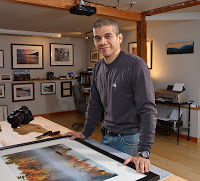
The Candid Frame #153 - Robert Rodriguez Jr.


Robert Rodriguez Jr. was trained as a musician and graduated from the Berklee College of Music in 1990 and was a music producer for 12 years before transitioning to landscape photography and the desire to spend as much time in nature.

With visual story telling,  he discovered the potential to express a more creative and personal vision. Focusing on the Hudson Valley allowed Robert to discover not only beautiful landscapes often taken for granted, but the changing mood and character of the region. Seeking to capture the beauty, or convey the emotional qualities of a place or moment in nature, his images have elicited responses ranging from evocative, to spiritual and breathtaking. He frequently travels beyond in search of other dramatic and unique locations, including New England, the southwest, and Canada.

Robert takes pride in a hands on approach to creating his expressive prints, working on every stage, from the initial exposure and processing, to printing and framing. His prints have been purchased by private collectors and commercial clients throughout  North America. You can discover more about his work by visiting his website and his blog

Robert Rodriguez recommends the work of Art Wolfe.


Click below to stream the interview.

 You can also subscribe to the show via iTunes by clicking here.

Or you can directly download the MP3 files by clicking here.